








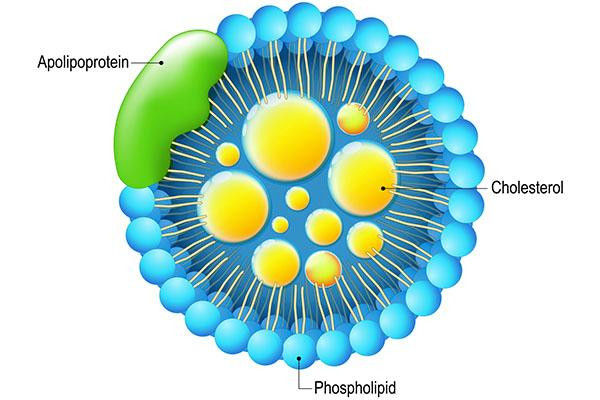
Excess cholesterol in your bloodstream can accumulate inside your arteries, paving the way for a heart attack or stroke. But to assess your risk of heart disease, a standard cholesterol test may not always give the full picture. Some people — especially those with diabetes, fatty liver disease, or obesity — might benefit from a test that measures apolipoprotein B (apoB).
ApoB is a protein that attaches to harmful fat particles in the blood to form lipoproteins, including low-density lipoprotein (LDL, often called “bad" cholesterol). An apoB test measures the number of LDL and other fat particles that can contribute to clogged arteries. “It’s a better indicator of heart disease risk than an LDL cholesterol value, which is an estimate rather than a direct measurement,” says Dr. Samia Mora, professor of medicine at Harvard Medical School and director of the Center for Lipid Metabolomics at Brigham and Women’s Hospital. Here’s a closer look at the different ways to check blood cholesterol — and who might want to consider an apoB test.
Cholesterol in your bloodstream
Cholesterol, a waxy, pale yellow fat, doesn’t just circulate freely in the bloodstream. It’s packaged into tiny protein-covered particles called lipoproteins. All the lipoproteins that contribute to clogged arteries, known as atherogenic particles, carry a single apoB molecule on their surface. But they differ in the amount of cholesterol they carry. They include not only LDL but also intermediate-density lipoproteins (IDL), very-low-density lipoproteins (VLDL), chylomicrons (the largest, lowest-density particles, made mainly of fat), and lipoprotein(a).
A standard cholesterol test usually reports your total cholesterol — the sum of your VLDL, LDL, IDL, and high-density lipoprotein (HDL) cholesterol combined. Some cholesterol tests report your “non-HDL cholesterol,” which is your total cholesterol minus the high-density lipoprotein (HDL). That value captures all the cholesterol in the atherogenic, apoB particles. But it doesn’t reveal one important thing: the actual number of these particles, which carry varying amounts of cholesterol.
What the apoB test result reveals
That apoB number matters because LDL particles — which carry most of the cholesterol in your blood — come in a range of sizes and are not created equal, Dr. Mora explains. If the LDL particles in your blood are mostly on the small side, you will have a greater number of these particles for any given LDL cholesterol level compared to someone with larger particles. The more particles there are traveling through your blood, the more likely they are to become stuck inside artery walls. So while your LDL cholesterol value may appear normal or even low, your apoB may be elevated.
Because the apoB test reveals the total number of atherogenic particles in the blood, it provides a better picture of a person’s risk of cardiovascular disease. In healthy people, apoB values less than 90 mg/dL are typically considered acceptable, while those between 90 and 129 mg/dL are considered borderline high to moderately elevated. ApoB values greater than 130 mg/dL are linked to a much higher risk for cardiovascular disease.
Who might benefit from an apoB test?
ApoB tests are widely available and aren’t very expensive, with costs averaging around $60 from major lab providers. So why isn’t apoB testing done routinely? First, cholesterol testing is deeply ingrained as the standard way to assess heart disease risk, based on decades of research that relies on cholesterol values. Second, LDL cholesterol and apoB are very closely related, so for most people, LDL cholesterol is generally a good proxy for apoB.
But for some people, apoB testing might be helpful. “Even if your LDL cholesterol is low, normal, or borderline high, you might have a high apoB,” says Dr. Mora. For people without known heart disease, an optimal LDL cholesterol is below 100 mg/dL. For people with known heart disease, an optimal target is below 70 mg/dL. But growing evidence suggests that an even lower target prevents more repeat heart attacks. Now, many cardiologists are recommending people with heart disease aim for an LDL below 55 mg/dL. And while an apoB of 90 mg/dL is fine if you’re healthy, a desirable apoB value is less than 70 mg/dL if you already have heart disease, says Dr. Mora.
People with signs of an unhealthy metabolism — such as prediabetes, a big belly, elevated triglycerides, or fatty liver — are far more likely to have a high apoB. At least a quarter of the population may fall into this second category and should consider an apoB test, says Dr. Mora. She also recommends apoB testing in people with a family history of heart disease, as well as those with low LDL who want to be confident that they have treated all their LDL-related risk.
If your apoB is high, lifestyle habits such as following a Mediterranean-style eating pattern and getting regular exercise can modestly lower the number. But cholesterol-lowering medications, including statins such as atorvastatin (Lipitor) and rosuvastatin (Crestor); ezetimibe (Zetia); PCSK9 drugs such as alirocumab (Praluent), evolocumab (Repatha), and inclisiran (Leqvio); and bempedoic acid (Nexletol) are much more effective, especially when combined with a healthful lifestyle.


 Ren Ecosystem