








Image:Adobe Stock & Getty
The capital of China's central Shaanxi province is more than just the gateway to the famed Terracotta Warriors.
Once the eastern terminus of the overland Silk Road and the imperial capital of 13 Chi-nese dynasties including the mighty Tang, Xi'an (formerly Chang'an) has a richly-tap-estried past. Modern-day Xi'an blends the heritage of an ancient capital with a thor-oughly contemporary vibe featuring glossy skyscrapers, bustling shopping districts and a sleek metro system.
EXPLORE
Soak Up History
Stretching almost 14 kilometres around the old city, construction of the ancient wall be-gan in 1370 during the Ming Dynasty. At its heart is the Bell Tower that served as a time-keeper and warning device against attacks. A short walk away is the Drum Tower, an imposing structure with a xieshan-style hip and gable double-eaved roof. For panoram-ic views of both the old and new city, rent a bicycle at the South Gate and ride atop the ancient fortification walls.
Stroll The Muslim Quarter
This neighbourhood has roots tracing back over a millennium to the Silk Road cara-vans bringing traders, scholars, and Islam into Tang Dynasty Chang'an. The heart of the Muslim Quarter is the beautifully-pre-served Great Mosque, a cultural fusion with its pagoda-style rooflines and Chinese courtyard gardens. The historic home of the Hui people in Xi'an descendants of Per-sian, Arab and Central Asian traders who intermarried locals is the perfect place to indulge in a plethora of halal delicacies from savouries to sweets.
Visit A Millennium-Old Pagoda
With its tiered, tapering brick design, the Giant Wild Goose Pagoda rises seven stories high. Small arched windows punctuate each level, while eaves subtly curve upwards. Originally built in 652 BCE during the Tang Dynasty, it was commissioned to house Buddhist scriptures and figurines that the monk Xuanzang brought back from his pil-grimage to India. Visit in the morning to beat the crowds or go in the evening to catch the musical fountain show at North Square.
See The Terracotta Warriors
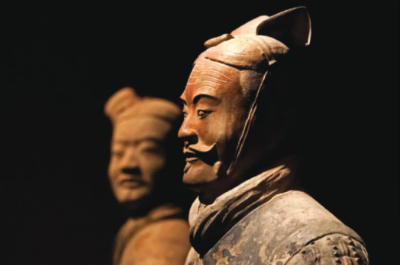
Just 35 kilometres northeast of Xi'an lies Emperor Qin Shi Huang's Mausoleum Site Museum, otherwise known as the home of the Terracotta Army. Consisting of thou-sands of lifelike terracotta soldiers built to protect an emperor after death, this UN-ESCO-listed site spanning 56 square kilo-metres is indisputably Xi'an biggest draw. The clay figures remain a testament to the might of the first Chinese emperor, Qin Shi Huang, who unified China under the Qin dynasty in 221 BCE.
Song of Everlasting Sorrow
This spectacular outdoor performance takes place at Huaqing Palace, about 10 ki-lometres from the Terracotta Army site. Based on the Tang Dynasty-poem mourn-ing Emperor Xuanzong's doomed love for his favourite consort Yang Guifei, the pro-duction blends music, dance and lantern-lit visuals to retell the tragic tale against a sce-nic mountain backdrop.
Shaanxi Puppet Theater
Showcasing stories drawn from mythology, history and folklore, this shadow puppet theatre features intricately carved figures animated behind a backlit screen, accompanied by folk music and songs. Catch this performance at Gao's Grand Courtyard in the Muslim Quarter.
EAT
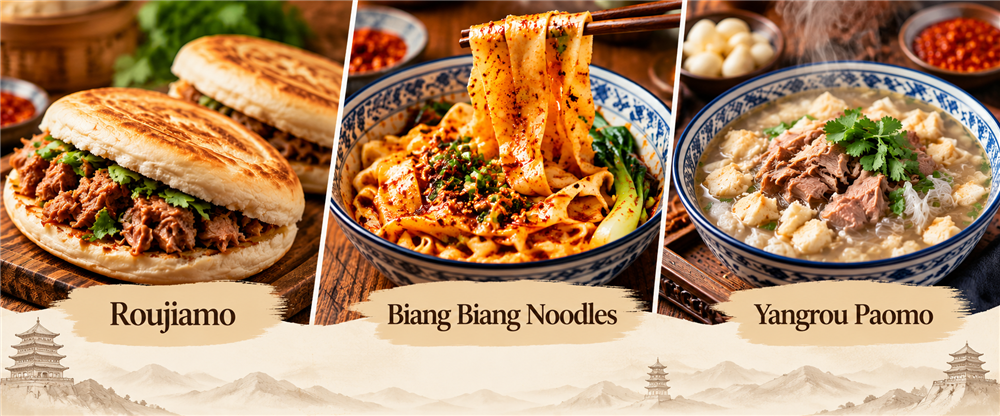
Roujiamo Also called the 'Xi'an hamburg-er', roujiamo consists of slow-braised meat, chopped and sandwiched between slightly charred, fluffy flatbread. Halal beef and lamb versions are available in the Muslim Quarter.
Biang Biang Noodles This dish showcases hand-pulled Shaanxi noodles in chilli oil, vinegar and scallions. The chewy noodles derive their name from the slapping sound produced when the dough is stretched.
Yangrou Paomo This Xi'an classic features flatbread crumbled into a bowl of slow-sim-mered mutton broth, sometimes supple-mented with chunks of tender mutton and vegetables. Pickled garlic and chilli sauce are served on the side.
SHOP
Dried Persimmons Locally known as shib-ing, these chewy discs are made with sun-dried persimmons dusted with crystallised sugar. Sweet and almost jammy, they make tasty edible souvenirs.


 Ren Ecosystem